


The culture problem hiding in plain sight
If you lead a business with 15 to 50 people and it still feels like you’re the escalation point for everything, you’re not broken.
You’ve just built what I built.
A culture that “works” only when you are in the middle of it.
I still remember the exact moment I realised I'd accidentally built myself a trap.
It was my fifth year in business, I had 20 employees, and my phone never stopped ringing. Every decision, every client question, every tiny problem: they all needed me. I was working seven days a week, had recruited my sister, my best mate, and my fiancée just to handle the chaos I'd created, and I was asking myself the question every over-worked business owner asks:
"Isn't owning a business supposed to be more fun than this?"
From the outside, The Physio Co (TPC) looked successful. We were profitable, winning awards, growing fast.
But on the inside? I was exhausted, frustrated, and stuck in a job that revolved entirely around me being the answer to every question. I'd become the human glue holding everything together, and it was slowly destroying any joy I'd had about running a business.
The worst part? I'd started The Physio Co five years earlier to create a job that inspired me. Instead, I'd built something that consumed me. Bit of a plot twist, that one.
That's when I discovered something that changed everything: the difference between culture by accident, and culture by design.
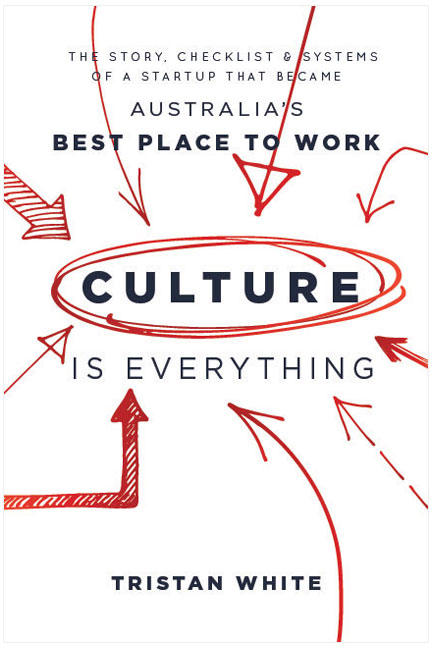
I wrote extensively about this discovery back in 2017 when I published my book, Culture Is Everything.
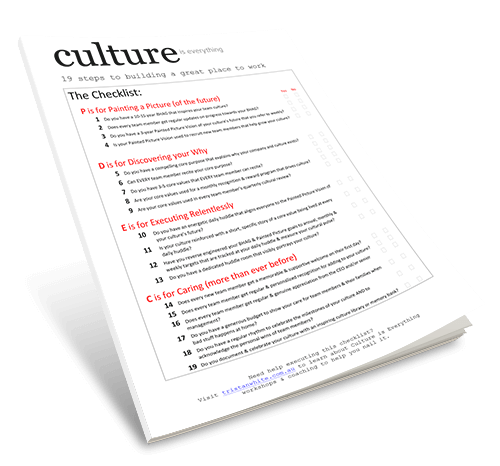
Culture Is Everything documented the 19-step system that took TPC from chaos to becoming Australia's Best Place to Work. Since then, something fascinating has happened: I've watched hundreds of businesses across various industries - construction, law, healthcare, hospitality, professional services and tech - apply the same system. And here's what I've discovered:
The system works everywhere, but most businesses still get it wrong.
They implement the huddles, print the values on the wall, throw the parties ... and still hit a ceiling. The energy fades. Good people leave. The founder almost burns out while clutching a laminated mission statement nobody can remember!
That's because TEAM CULTURE doesn't exist in a vacuum. It needs fuel (PERSONAL CULTURE) and a foundation (MONEY CULTURE). This trilogy of manifestos - Personal Culture Unlocked, Money Culture Matters, and now Team Culture Revisited - completes the picture.
Personal Culture gives you the self-awareness to lead.
Money Culture gives you the financial foundation to sustain growth.
Team Culture gives you the system to scale without losing your soul.
This piece isn't a rewrite of the book. It's an evolution. It represents lessons learned from a decade of implementation across dozens of businesses, including my own. It's proof that whether you're running a law firm in Melbourne, a tech startup in San Diego, or a manufacturing crew in regional Australia, the fundamentals remain the same.
Location doesn't kill culture. Neglect does.
And yes, I have been guilty of that too.
The trap most business owners build (without even knowing it)
Most business owners don't set out to create chaos.
We just get busy, start making it up as we go, and before we know it, we've accidentally built a culture where nothing works without us. Where every decision needs our input. Where our team waits for permission instead of taking initiative. Where you can't go to the toilet without someone texting you about the coffee machine!
Sound familiar?
Here's what that chaos actually costs: every time a good employee leaves because they're frustrated by unclear direction or lack of support, you're looking at 0.5 to 1.5 times their annual salary in recruitment, training, and lost productivity. For a $90,000 employee, that's up to $135,000 walking out the door. Do that three times in a year and you've just burned over $400,000, not to mention your evenings, your sanity, and the morale of everyone left behind, wondering if they should update their LinkedIn profiles too.
Here's what I learned the hard way: culture isn't something that happens to you. It's something you build, deliberately, systematically, with the same discipline you'd use to build your marketing system, your sales process, or your financial controls.
You already have a culture. Every business does. The question is whether you designed it on purpose, or let it happen by accident while you were busy putting out fires and chasing invoices.
Most cultures are built by default, a chaotic mix of whoever yells loudest, whatever worked at someone's last job, and the personality quirks of your longest-serving staff member. It's like letting toddlers design your marketing system. Technically, something gets built, but nobody knows why or how to fix it when it breaks.
That's what the Culture Is Everything System does, whether your team shares a building, a Zoom room, or absolutely nothing but a payroll system and a group chat (that nobody reads!) - four parts that work in boardrooms, co-working spaces and spare bedrooms, tested by companies proving the same thing:
Lack of intent doesn't kill culture. Lack of systems does.
The Four parts of the Culture Is Everything System
1. Discover Your Core (or keep winging it like everyone else)
Here's the uncomfortable truth: if you haven't deliberately defined your culture, someone else already has. And it's probably your most opinionated team member, the one who's been there longest and treats "but we've always done it this way" as holy scripture.
Netflix didn't wing it. They designed their culture like engineers design bridges, with clear specs, tested materials, and a plan that could handle serious weight. Their famous Culture Deck (now Memo) wasn't motivational fluff. It was a blueprint. Freedom, responsibility, candour: values that let them fire themselves from the DVD business and become streaming royalty.
Meanwhile, Kimberlee Hughes at Kool Katts in Sydney was watching her therapy team slowly drift apart. Great people, meaningful work, but everyone pulling in different directions because nobody had actually defined what direction they were supposed to be heading. So she kickstarted her culture re-boot with the Culture Is Everything System and started treating culture like it actually was: a system you can build. She locked herself in a room (metaphorically) and did the hard work of dragging their real purpose and values into the daylight. Not the pretty words that look good on websites, but the actual operating principles they'd live and die by.
The result? A crew that's more united than a pack of golden retrievers and twice as effective.
Here's something embarrassing: for the first five years at The Physio Co - I actually thought I was communicating clear expectations to my team. I'd have these detailed conversations in my head about how things should be done, get frustrated when people didn't do it 'right,' then realise I'd never actually said any of it out loud. I was essentially getting annoyed at people for not reading my mind. Turns out, telepathy isn't listed as a core competency on anyone's LinkedIn profile. Not my finest leadership moment.
Think of this like building your sales system. You wouldn't just hope your team figures out how to sell, would you? You'd define the process, train the skills, and measure what matters. Culture works the same way: it's a system that can be designed, implemented, and improved.
Step one: Get clear on your purpose (why you exist beyond making money) and your three to five non-negotiable core values. Not the sanitised corporate speak that could apply to any business, but the specific beliefs that make your team yours. Values aren't wall art; they're decision-making tools.
Because your people are already operating by some set of values. The problem is, they're making them up as they go. Wouldn't you rather they were the right ones?
2. Document Your Future (before someone else does)
If you don't spell out your vision, your team will make up their own. And they'll all be different. And they'll probably involve working from Bali while you're stuck paying Australian wages. (Not that there's anything wrong with Bali. Just make sure your vision includes who's actually paying for the fruit, fancy-looking drinks, and co-working space.)
Here's what I learned the hard way at The Physio Co: when people can't see where you're headed, they start planning their own exit routes. Not because they don't care, but because humans need a story to run toward. Without one, they'll write their own, usually starring them at a different company.
Curae Law, a 16-person legal practice in Perth, Australia, cracked this code with an off-site team day called Curae Connect. The three Company Directors, including Lucy Dickens, didn't bore everyone with quarterly projections and SWOT analyses. She painted a vivid story of their future. The team left buzzing, finally clear on where they were all heading together.
Nutrition Warehouse, Australia’s largest supplement retailer, did it with their 10-year obsession - a detailed, inspiring description of the company years down the track. Suddenly, instead of just showing up for pay cheques, everyone could see themselves as characters in an exciting story worth sticking around for.
And Airbnb? They nailed it with two simple words: "Belong Anywhere." That wasn't just a slogan, it was a north star that carried them from air mattresses on floors to reshaping how the world thinks about travel.
YOUR MOVE: draft your own Painted Picture Vision. Four to five pages max. Make it specific enough that people can see themselves in it, inspiring enough that they actually want to be there, and clear enough that a teenager could explain it back to you.
This isn't about crafting a 47-page strategic plan that'll gather digital dust in your shared drive. Think movie trailer, not tax return: short, clear, and compelling enough to get people lining up for tickets to your future.
If your team can't see where you're going, don't be surprised when they stop following.
3. Execute Relentlessly (not just good intentions)
Vision without execution is just expensive daydreaming. And culture without systems is like fitness without exercise: everyone talks about it, nobody actually does the work, and then wonders why nothing changes.
Here's where most leaders fail: they nail the inspiration speech at the quarterly meeting, then spend the next 89 days hoping their good intentions somehow translate into a better culture. Spoiler alert: they don't. Hope is not a strategy. Neither is it another motivational poster.
Culture lives in your systems. Your hiring process. Your meeting rhythms. How you celebrate wins and handle mistakes. Whether your one-on-ones actually happen or keep getting bumped for "urgent" emails that weren't urgent last Tuesday (or ever).
I used to think systems were for boring corporate types who cared more about process than people. Real entrepreneurs, I told myself, were scrappy and spontaneous. Turns out, scrappy and spontaneous is just code for 'making everyone else's job unnecessarily hard.' My team didn't need another inspiring pep talk; they needed to know what was expected and how to make decisions without calling me at 6pm on Friday. (Or Saturday. Or Sunday. You get the idea.)
Atlassian figured this out early, hard-wiring rituals like ShipIt Days and values-based hiring into their DNA. That systematic consistency took two uni grads from Sydney to a global empire. Not because they had better pizza parties, but because they built better systems. (Though I'm betting their pizza was pretty decent too.)
At Coerco - a growth-focussed manufacturer based in regional Australia - 150 staff gather mid-year at the local footy club. It's not just a party, it's a ritual designed to align, celebrate, and reconnect their scattered workforce. Beer and sausage rolls included, but that's not the point. (Okay, the sausage rolls are slightly the point.) The real point is consistency.
At The Physio Co, we turned culture into clockwork: daily huddles to stay connected, weekly team rhythms, quarterly planning sessions, and annual traditions that people actually looked forward to. Over time, our team stopped saying "Tristan wants us to do this" and started saying "This is just what we do here."
That's when you know your culture system is working, when it starts to runs itself.
Think of it like your accounting system. You don't wing your finances and hope for the best, do you? You have processes, schedules, and non-negotiable activities that happen whether you feel like it or not. Culture deserves the same respect.
Because flashy perks fade and ping-pong tables gather dust, but systems that honour your values? Those create the consistency that builds trust. And trust is what turns good employees into culture champions.
4. Show More Love (without getting weird about it)
Here's what separates culture systems that last from ones that collapse: you have to actually care about your people as humans, not just productivity units with name badges.
I know what you're thinking: "Great, Tristan's gone soft. Next, he'll be suggesting group hugs and feelings circles." Relax. Showing love isn't about mandatory yoga sessions or forcing everyone to share their weekend emotions. It's about recognition. Respect. Remembering that behind every Zoom square and desk chair is a real person dealing with real life: mortgage stress, sick kids, aging parents, dreams that keep them awake at night.
Zapier, a fully remote company scattered across time zones, shows love daily through its systems. They celebrate wins publicly, share life updates that matter, and weave genuine empathy into workflows that span continents. No forced fun required.
At The Physio Co, I had to learn this the hard way. I cared deeply about our team, but I wasn't showing it. Classic bloke move: assuming people could read my mind and somehow know I appreciated them. Once I started writing handwritten anniversary cards (yes, actually handwritten, your team can spot a mail-merged template from the International Space Station), creating space for personal news in our meetings, and celebrating the small wins that mattered to them, morale lifted faster than property prices in a mining boom.
Here's what showing love actually looks like in practice:
- Remembering that Julia's son just started high school
- Acknowledging that Dave's presentation knocked it out of the park, not just in private, but where others can hear it
- Creating systems that catch people doing things right, not just wrong
The return on investment? Teams that bring energy instead of draining it. People who stay longer and care deeper. Staff who'll run through walls for you because they know you'd do the same for them.
And no, this doesn't make you a pushover. Love without standards is just enabling. Standards without love? That's just management by fear with better marketing.
The payoff: Why this actually matters
When you Discover Your Core, Document Your Future, Execute Relentlessly, and Show More Love, something magical happens. Your team stops feeling like a collection of individual contractors and starts operating like a unified force. Like an elite sports team, but one that actually goes home at 5pm.
Netflix proved it by reinventing entertainment.
Airbnb proved it by reshaping hospitality.
Atlassian proved it by conquering software.
And closer to home, companies that I've mentored, including Nutrition Warehouse, Curae Law, Kool Katts, and Coerco, are proving it works whether you're global or local, tech or traditional, office-based or scattered all over the place.
The pattern is always the same: culture isn't a nice-to-have perk you add when business is good. It's the engine that makes good business possible.
Teams with intentional culture bring more energy, stay longer, and care as much as you do about the outcomes. They solve problems you didn't know existed and create opportunities you couldn't have imagined. They become the competitive advantage that can't be copied, bought, or outsourced (though everyone knows that some consulting firms will try to sell you a copycat version for three times the price).
Your next steps: Start before you're ready
So where does this leave you? Probably exactly where I was in year five: knowing something needs to change, but not sure where to start.
Maybe you're reading this on your lunch break, wondering if you'll actually do anything about it or just file it under "good ideas I'll never implement" along with that meditation app and your gym membership.
Here's the thing about culture systems: they work best when you build them before you desperately need them. Like insurance, fire exits, and backup hard drives: better to have them and not need them than need them and not have them.
Pick one pillar. Start this week.
Don't wait until you've got the perfect plan or the ideal timing. Perfect is the enemy of done, and done is the enemy of whatever dysfunctional culture is accidentally building itself while you're waiting for the right moment.
Draft your values. Schedule that team meeting. Write your first thank-you note. Paint your picture of the future. The specific action matters less than the fact that you're taking it.
All of the above represents a core part of what I call the CULTURE EFFECT PLATFORM:
Personal Culture Unlocked gives you the self-awareness to lead yourself.
Money Culture Matters builds the financial foundation that makes everything sustainable.
Team Culture Revisited gives you the system to scale without losing your soul.
Culture isn't something you have. Culture is something you do - a thousand times over!
The only question is: Are you ready to design yours, or happy to keep letting it design itself?
The choice, as they say, is yours. But choose quickly: your team is building something either way.
—
Tristan