



The conversation we’ve been avoiding (until now).
Every service business owner I know wants the same three things: freedom, impact, and a team they’re proud of. But here's what's stopping most of us: we treat money like Voldemort - ‘the topic that must not be named’.
It’s time to break that spell. It’s time to bring money out of the shadows and into the culture conversation. Because if culture is everything, then money culture is the foundation that makes “everything” possible.
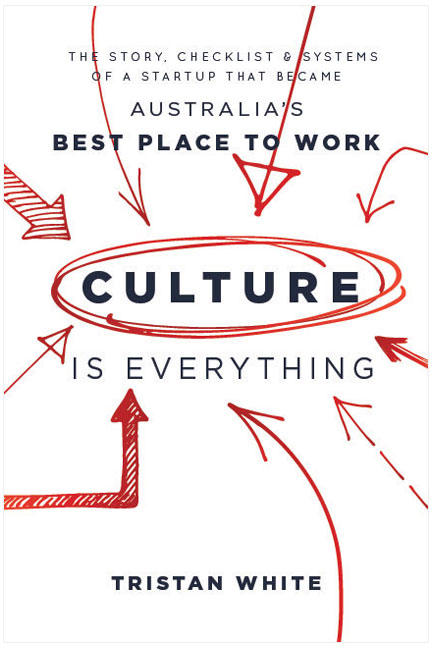
Culture has been my life’s work for over a decade. I’ve written a book about it, spoken on stages across Australia and the world, and helped build one of Australia’s best workplaces. Through those years, the idea I’ve obsessed over is: culture isn’t part of business, culture is the business.
But here’s what I got wrong: I thought culture stopped with the team culture system including morning huddles, core values awards and birthday parties. It turns out that culture’s most powerful expression happens in the one place most of us are too scared to look: our relationship with money.
Yep, I said it. Money. Cue the dramatic music.
We didn’t start our businesses to swim in gold coins like Scrooge McDuck. We started for freedom, to make a difference, and to build a strong, high performing team. But, when money is left in the shadows, culture suffers.
And when culture suffers, good people leave.
You know the feeling: a brilliant new hire finally gets up to speed, then vanishes for “a new opportunity.” Translation: you’re back to square one, rewriting the job ad and crossing your fingers and toes in hope of a more loyal recruit this time.
The part most owners don't calculate: each departure costs you 50-150% of their annual salary in recruitment, training, and lost productivity. Do the math on your last three departures; that's your money culture tax.
One resignation hurts, but when departures pile up, you’re not just losing people, you’re losing your weekends.
When people leave, you’re left juggling the work, the stress, and that deflating client email that begins: “Can I speak to the manager?” (Spoiler: you are the manager, the recruiter, and the person who restocks the coffee machine.)
That’s why I’ve come to believe, as deeply as I believe in team culture, that Money Culture Matters.
From Culture Is Everything to Money Culture
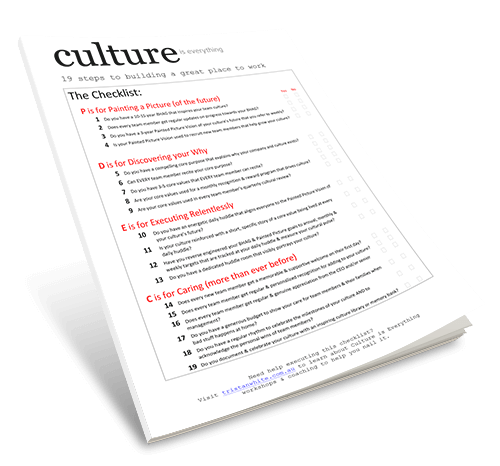
When I wrote Culture Is Everything, my purpose was clear: give service business owners a playbook for creating workplaces where people wanted to come to work, not just had to. The four-part system worked. That book and system have helped thousands of businesses build stronger cultures.
But here's the truth I had to learn through painful experience: you can't separate culture from money.
How you pay yourself. How you reward your team. How open you are about profits (and losses). How you use extra cash. These aren’t just accounting choices; they’re culture choices. Each one either builds trust or chips away at it, one payroll at a time.
If the Culture Is Everything System taught us that culture isn't fluffy, it's the foundation of sustainable business, then Money Culture is the concrete foundation that everything else sits on. It’s the ground your people stand on together, the stability that allows culture to thrive.
Money culture is the unspoken soundtrack of your business. And right now, too many of us are dancing off-beat. (Think Elaine from Seinfeld. Funny to watch, not so funny to run.)
A Painful Personal Lesson: Selling Half My Business
Here’s how I learned the hard way…
In 2015, my wife and I sold 50% of The Physio Co to a publicly listed partner. On paper, it was perfect: they had deep pockets, we had proven systems, and fast growth was our goal.
The sale was strategically sound. Our family extracted a nice chunk of financial value after a decade of delayed gratification, and we fuelled growth plans that would take us national (and eventually international). I stayed on as CEO. Everything looked rosy.
But beneath the surface, our money cultures were like oil and water, they just wouldn't mix.
The culture we'd worked so hard to build didn't just feel diluted, it felt like watching your favorite song played by a cover band. Technically correct, but missing the soul. Meetings that used to energize me became painful. Decision-making that once took minutes now took months. Priorities that were once crystal clear became murky negotiations.
It wasn't that our equity partner was villainous, far from it. They were good people with different beliefs and priorities. But when your money culture isn't aligned - when ownership, purpose, and financial philosophy point in different directions - cracks appear faster than you can patch them.
Fast forward to 2020. After some tough but respectful conversations (plus a global pandemic, just to keep life spicy), we bought back the shares. Suddenly, we were back to being 100% owners.
That moment was a turning point. I realized that if you don't have clarity and courage around money, you can end up building a business you don't even want to run.
From then on, the seeds of becoming more courageous and transparent with money were sown, and we tiptoed towards an experiment with open-book finances.
The Inspiration: The Great Game for the Modern Era
Years before that ownership rollercoaster, I’d been inspired by Jack Stack’s book The Great Game of Business. His radical idea in the 1980s: open up the financials, teach everyone how the business makes money (or loses money 🤪), and give them a stake in the outcome.
Back then, leaders clutched their balance sheets tighter than their first Nokia brick phone. But Stack proved something timeless: when you open up, people step up.

I see Money Culture Matters as a modern, service-business-friendly evolution of that philosophy. Think of it as The Great Game: The Remix Edition, same principles, but with better wi-fi, more values-driven staff, and fewer shoulder pads.
And here’s the exciting part: we’re not alone. Around the world, bold businesses have been showing the way with experiments in radical transparency and proving it could work.
Companies That Show Us the Way
As the introduction of open-book finances was researched and considered for The Physio Co, the pioneers of financial transparency both scared and inspired me. Some of these mavericks are:
Buffer: Radical Transparency
Buffer, the social media scheduling company, published every employee’s salary online. Bold move, right? Imagine posting your pay on Facebook and having your Aunt Helen comment, “Good for you, dear, but when are you getting a real job?”
They didn’t stop there: they share revenue and metrics too. Transparency is their superpower.
ConvertKit (now Kit): Open Metrics
Kit runs a live dashboard showing monthly revenue, customer numbers, even churn. It’s the business version of sharing your Apple Watch steps with all your friends. Everyone knows the score. No one can fudge it.
Patagonia: Profit with Purpose
Then there’s Patagonia. Founder Yvon Chouinard didn’t just talk about purpose. He gave the entire company away to fight climate change. Their message: “Earth is our only shareholder.”
Now, you and I probably won’t be giving our businesses to the planet. But the principle still applies: profit is fuel for purpose. When your team sees money being used to create impact, they lean in harder than a rugby scrum.
A Local Example: Small Steps, Big Shifts
Even here in Australia, I’ve seen construction crews run weekly toolbox talks where they share not just safety updates, but the numbers: hours billed, materials used, margins made. When the team could see how an extra hour of rework ate into profit, suddenly accuracy mattered as much as speed.
Here's what these companies understand that most don't: transparency isn't just about being open, it's about creating shared ownership of outcomes. The challenge for us as service-business owners is to take those big, bold ideas and make them practical in our world. That’s where the three pillars of Money Culture come in…
The Three Pillars of Money Culture
So, what does a healthy money culture look like? It comes down to three action-oriented pillars:
1. Master Your Money Mindset (Pay Yourself First. No, Really)
In my early days, I thought being noble meant paying myself last. Staff, rent, suppliers first. Me? Whatever was left.
Spoiler: there was never much left.
Sound familiar? Plenty of owners are secretly the lowest-paid person in their own business. It feels selfless… until it turns into frustration that no one else notices the sacrifices you’re making. That’s not sustainability, that’s martyrdom with a spreadsheet.

One night, I realised I was paying myself less than our recent-graduate physios. That was humbling. Nothing like a 22-year-old on a fresh salary package to make a business owner rethink their life choices. I was modelling unsustainability and calling it virtue.
Here’s the truth: owners deserve fair, market-appropriate and consistent pay. Not because you’re greedy, but because it models sustainability. If culture starts with self-leadership, then money culture starts with self-compensation.
2. Build Trust with Transparency (Open the Books. Don't Panic)
“People won’t understand the numbers,” some leaders say. Or: “If they knew how profitable we were, they’d all want a pay rsie.”
Here’s the problem: when you don’t talk about money, your team does it for you. The car you drive, the clients you win or lose, even whether you’re a bit stressed at the Monday meeting, it all becomes part of the unofficial balance sheet your people are adding up in their heads. And nine times out of ten, the story they invent is scarier than the truth.
That’s why financial secrecy is like trying to hide a dodgy wi-fi connection. Everyone notices the lag, and the stories they make up while waiting are worse than the truth.
At The Physio Co, we introduced “The ‘board,” a simple Google Sheets-powered scoreboard that tracked revenue, expenses, profit, and cash flow. I walked the team through it regularly, like a sports coach explaining the game strategy. Suddenly, people knew the score and realised how we could win.
The most surprising result? With more information, no one asked for a pay rise in almost 18 months. Instead, they paid attention to the score and started to understand the game.
3. Use Profit for Purpose (Make Money Mean Something)
You know the feeling: profits come in, then somehow disappear into the black hole of “expenses.” If your team can’t see where money goes, they assume it’s funding a bigger boat - or whatever fantasy perk people imagine their boss is hiding.
Here's where most business owners get it backwards. Profit isn't the evil twin of purpose, it's the protein powder that fuels it.
And your team notices how you use it. When profits vanish into a black hole: no bonuses, no growth, no visible impact - people quietly ask: “What’s the point?” But when they see profits funding pay increases, training, or something that makes their workday better, pride and loyalty grow like wildfire.
At The Physio Co, retained profits have funded pay rises to meet the cost-of-living challenges, paid for inspiring speakers at our team conferences, kick-started our profit-sharing program, and covered our long-running traditions, such as MVP awards and Culture Books.
It wasn’t about extravagance. It was about meaning. Profit transformed our workplace from a collection of paychecks into a platform for impact that people could feel proud of.
The Human Side of Getting it Wrong
Let me confess my spectacular failures.
I’ve underpaid myself to the point of resentment. At one stage, I thought underpaying myself was noble, like some kind of small-business Gandhi. In reality, it sent mixed signals: I was preaching sustainability to my team while modelling the exact opposite. That’s not leadership, that’s confusion.
I also convinced myself that if I just bought enough business books, the knowledge would somehow transfer by osmosis into my bank account. Spoiler: book piles look impressive, but banks still prefer actual cash.
I’ve hidden financial stress until it leaked out in all the wrong places (hello, long-suffering family members 👋 😬). My coping strategy? Binge-eating choc chip cookies and staring at spreadsheets, hoping the numbers would magically reorganise themselves into profitability. (Spoiler: Excel doesn’t respond to wishful thinking.)
Money culture isn’t about perfection. It’s about courage. Courage to talk about the thing most people avoid. Courage to share numbers even when they’re not Instagram-worthy. Courage to pay yourself fairly and model sustainability for your team.
And yes, a bit of humour helps. Money talks… but sometimes it sulks like a teenager asked to empty the dishwasher.
Those failures taught me something simple but powerful: if money culture isn’t healthy, everything else in the business wobbles.
Why This Matters Right Now
The business world is shifting faster than a Melbourne weather pattern. Your team expects transparency. Your customers are values-driven, they'll switch providers over a principle. Meanwhile, costs are climbing, margins are shrinking, 'business as usual' is now 'survival mode with a forced smile’, and resilience has become the new superpower (no tights required, just endless Zoom calls).
For service businesses with 15–50 employees, this is a massive opportunity. You’re not weighed down by bureaucracy. You can move quickly. You can model a new way. A way where money and culture aren’t enemies, but dance partners.

But What About the Objections?
I hear the protests already:
"If I share our numbers, everyone will demand a pay increase!" Actually, most people are already guessing the numbers anyway, usually wrong, and usually scarier than reality. When you share the truth, you replace rumours with clarity.
"Our margins are too thin to be transparent!"
Thin margins are exactly why you need transparency. Your team can help solve what they can see. (Besides, if you can explain Netflix to your boomer parents, or even grandparents, you can explain profit and loss to your staff.)
"I barely pay myself enough as it is!" Which is precisely why you need to fix your money culture before it's too late.
Your Challenge: Three Steps This Quarter
Here's your mission, should you choose to accept it:
- This Month - The “Stop Playing Martyr” Step. Calculate and start paying yourself what you'd pay a competent CEO (hint: that's you). Model sustainability, not martyrdom.
- Next Month - The “Show-and-Tell” Step: Share one real number with your team. Not your daily step count, an actual business metric. Start small, maybe monthly revenue or a key performance promise. No need to upload your entire Xero file to the team WhatsApp group, unless you’re into chaos.
- This Quarter - The “Make It Matter” Step: Fund one purpose-driven initiative that makes your team proud. Something your team will remember in five years. It doesn't have to be expensive, but it must come from your heart. Think less “fancy office ping-pong table,” more “something that actually helps people breathe a little easier at work.”
Small steps compound like interest, but with less mathematics and more meaning.
The Foundation Beneath the Foundation
When I wrote Culture Is Everything, I meant it. But what I see now is that money culture is the invisible thread that holds everything else together.
A business without an intentional Money Culture is like driving across the country with no fuel gauge. You'll make progress for a while, but eventually, you'll stall. And probably on the freeway, with your whole team in the backseat asking, "Are we there yet?"
This isn't just about transparency, it's about integrity. It's about building businesses that don't just survive tough times but get stronger because everyone understands the game they're playing.
When the next economic downturn hits (and it will), when costs spike unexpectedly (they always do), when you lose your biggest client on a Tuesday afternoon: that's when money culture matters most. Teams with financial clarity don't panic like tourists without GPS, they problem-solve. They don't abandon ship; they help steer through the storm.
So let's not stall. Let's fuel up with mindset shifts, transparency, and purpose-driven profit.
Because if culture is everything, then money culture is the everything beneath everything. Get it right, and you don't just run a business, you build a movement your team will never want to leave.
Money doesn't have to stay the Voldemort of business. When you name it, share it, and use it with purpose, it becomes your culture's greatest ally.
Your team is waiting. Your future self is waiting. And so is the movement we're building, together.
The only question is: are you ready to name what must not be named?
That's why, deep in my bones and my bank statements, I believe: Money Culture Matters.
____
NB - Money Culture isn’t the whole story. It’s one of three essentials: Team Culture, Personal Culture, and Money Culture. Together, they form The Culture Effect Platform - a practical roadmap for service businesses that want to last, grow, and inspire.